Artificial Intelligence & Machine Learning
For more information on Artificial Intelligence & Machine Learning contact +91 9538012218 or mail us to hod.aiml@agadiengcollege.com
“Transform rural aspirants into competent software professionals through continual learning, experiential innovation and professional ethics.”
M1: To provide teaching-learning practices that develop core competencies in Computer Science Engineering to meet the industry and higher education needs.
M2: To provide innovative thinking mindset in Computer Science engineering graduates through industry collaborations.
M3: To develop information technology experts capable of adopting sustainable mechanisms.
M4: To create software engineers with professional integrity and ethical values.
- To encourage students to participate in National and International level events in the field of emerging technologies.
- To organize Faculty Development Programs to enhance the skill set to cope up with NEP 2020.
- To motivate the faculty and students to remain exposed to the industrial processes and activities on regular basis.
- To Organize techno-cultural events, hackathons for the benefit of students.
- To Achieve minimum 80% of placements for our students.
- To transform the department and its students into a multidisciplinary stream where students can collaborate with other departments for project works & research.
- To establish center of excellence laboratories in collaboration with industries.
- To get funds from Government agencies & Corporate sectors for Research activities & laboratories
- To make CSE Research center stronger by adding more number of Research guides, Research scholars, publications and receiving funds from different sources.
- To implement effective start-up policies to bring small scale industries & incubation centers into the campus.
- To make 40% of our CSE students to get Minor Degree along with their Major Degree from VTU Belagavi.
Program Specific Outcomes
PSO 1 : Able to apply fundamental knowledge of mathematics, electrical & electronics along with strong foundation of Computer Science & Engineering theory & concepts while developing software products.
PSO 2 : Able to analyze, design & develop customer friendly good quality socio-technical systems with proper algorithmic principles, system models & architectural styles
PSO 3 : Be prepared to work professionally in software industries, able to achieve higher studies and develop software systems with modern tools & technical skill sets.
PEO 1: To provide every student with a strong conceptual foundation in the core areas of Computer Science and Engineering.
PEO 2: To provide student awareness on the life-long learning in the field of Information Technology and to introduce them to leadership qualities, professional ethics and codes of professional practice.
PEO 3: To emphasize on academic excellence to carryout higher studies and research in computer science industry or academia and personality development through curricular, co-curricular & extracurricular activities.
PEO 4: To engage in projects requiring teamwork and design of Computer Systems with hardware and software components.
PEO 5: To apply creatively their understanding of computer science and engineering principles to the solution for problems arising in whatever career path they choose.
PO-1: Engineering Knowledge: Apply the knowledge of mathematics, science, engineering fundamentals, and an engineering specialization to the solution of complex engineering problems.
PO-2: Problem analysis: Identify, formulate, research literature, and analyze complex engineering problems reaching substantiated conclusions using the first principles of mathematics, natural sciences, and engineering sciences.
PO-3: Design/development of solutions: Design solutions for engineering problems related to computer engineering and design system components or processes that meet the specified needs with appropriate consideration for the public health and safety, and cultural, societal, and environmental considerations.
PO-4: Conduct investigations of complex problems: Use research-based knowledge and research methods including design of experiments, analysis and interpretation of data, and synthesis of the information to provide valid conclusions.
PO-5: Modern Tool Usage: Create, select, and apply appropriate techniques, resources, and modern engineering and IT tools including prediction and modeling to complex engineering activities with an understanding of the limitations.
PO-6: The Engineer and Society : Apply reasoning informed by the contextual knowledge to assess societal, health, safety, legal, and cultural issues and the consequent responsibilities relevant to the professional engineering practice.
PO-7: Environment and Sustainability: Understand the impact of the professional engineering solutions in societal and environmental contexts, and demonstrate the knowledge of need for sustainable development.
PO-8: Ethics: Apply ethical principles and commit to professional ethics and responsibilities and norms of the engineering practice.
PO-9: Individual and Team Work: Function effectively as an individual, and as a member or leader in diverse teams, and in multidisciplinary settings.
PO-10: Communication: Communicate effectively on complex engineering activities with the engineering community and with society at large. Some of them are, being able to comprehend and write effective reports and design documentation, make effective presentations, and give and receive clear instructions.
PO-11: Project Management and Finance: Demonstrate knowledge and understanding of the engineering and management principles and apply these to one’s own work, as a member and leader in a team, to manage projects and in multidisciplinary environments.
PO-12: Lifelong learning: Recognize the need for, and have the preparation and ability to engage in independent and lifelong learning in the broadest context of technological change.

Dr. Shivarajkumar Hiremath
Assoc. Professor
I/C Head of Artificial Intelligence & Machine Learning
SKSVMACET, Lakshmeshwar
Karnataka, India.
hod.aiml@agadiengcollege.com
+91 95380-12218
Welcome to the Artificial Intelligence & Machine Learning Department.
The Department of CSE (Artificial Intelligence & Machine Learning) was established in 2025 with an intake capacity of 60 students. It offers a comprehensive 4-year undergraduate program aimed at building a strong foundation in computer science while providing in-depth knowledge of AI and ML. The department emphasizes industry-aligned learning, ethical software development, and sustainable technology practices. Students gain practical experience through hands-on workshops, technical events, and faculty development programs. In addition, the department actively fosters research and innovation in emerging areas of AI and ML, preparing students to meet the dynamic needs of the industry and contribute meaningfully to technological advancements.
Teaching Staff
Dr. Shivarajkumar Hiremath
Assoc. Professor & I/C Head
Name: Dr. Shivarajkumar Hiremath
E-mail: hod.aiml@agadiengcollege.com
Mobile No: +91 9538012218
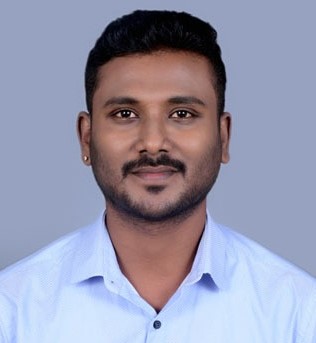
Dr. Raghavendra A
Assoc. Professor
Name: Dr. Raghavendra A
E-mail: raghavendra.aiml@agadiengcollege.com
Mobile No: +91 9902780879

Mr. Prakash Hongal
Assistant Professor
Name: Mr. Prakash Hongal
E-mail: prakash.aiml@agadiengcollege.com
Mobile No: +91 9611527383
Technical Staff
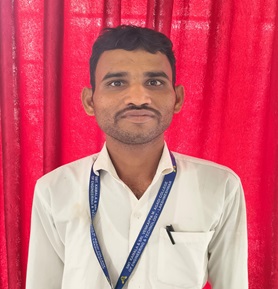
Mr. Anilkumar S H
Instructor